
Articles
Bladderwrack: What It Is and Why It Deserves a Careful Look
By Leanne & Tashan · Published
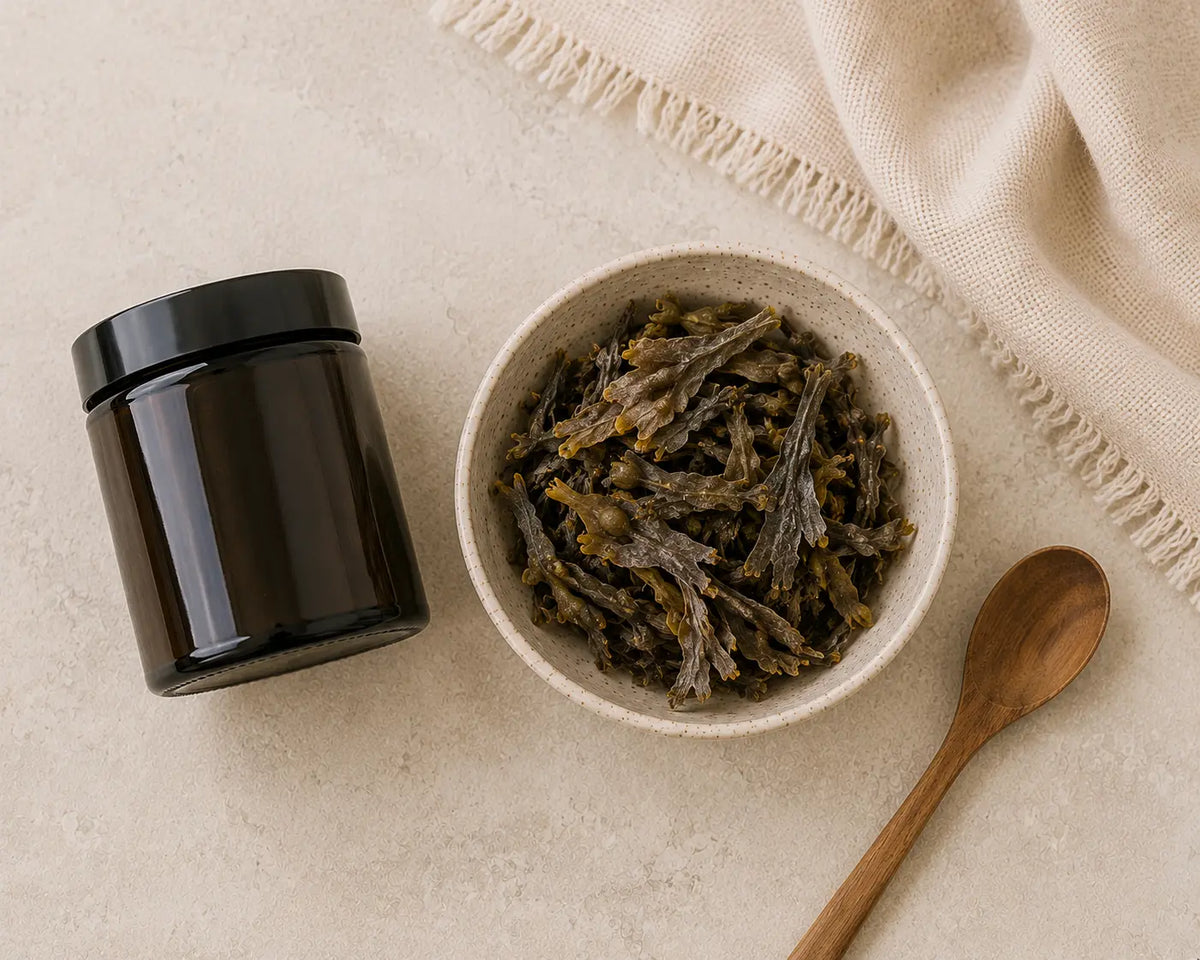
Bladderwrack is one of those ingredients you'll often spot alongside sea moss, black seed oil and other traditional botanicals — in capsules, powders, liquid extracts, or blended into supplement formulas.
It also comes with a lot of online chatter, much of which goes well beyond what anyone is actually allowed to say about it in the UK. So bladderwrack is worth understanding properly before you add it to your routine, because it is not quite the same as your average wellness ingredient.
Here is what you need to know.
What is bladderwrack?
Bladderwrack is a brown seaweed with the scientific name Fucus vesiculosus. It grows along rocky coastlines, has firm, olive-brown fronds with the distinctive air bladders that give it its name, and a briny, savoury smell when it is dried.
Today, it is commonly sold as:
- Capsules
- Powder
- Liquid extracts
- Tea blends
- Seaweed supplement blends
Like other seaweeds, it naturally contains iodine, and the amount can vary a great deal between harvests and products. That alone makes it worth approaching thoughtfully rather than casually.
Why do people talk about it so much?
Bladderwrack has a long history as a coastal food and a familiar sight on British and Irish shorelines, and seaweed generally has become fashionable in the wellness world. That visibility, rather than anything established about what it does, is why it turns up so often.
You will see it promoted online — by other people, not by us — for thyroid support, digestion, skin health, metabolism and weight management. We want to be clear that we do not make or endorse any of those claims. None of them are authorised for bladderwrack on the GB Nutrition & Health Claims Register, which means they cannot lawfully be used in marketing in Great Britain, whoever is making them.
Bladderwrack and iodine: the important bit
The most important thing to understand about bladderwrack is its iodine content.
Iodine is something the body needs, but in appropriate amounts. More is not automatically better. Too much iodine can actually affect thyroid function, particularly for people who already have thyroid conditions or who take thyroid medication.
This is why bladderwrack should not be treated as a casual everyday add-on without first checking whether it is the right fit for you.
What we can and cannot say about bladderwrack
This is where online content often becomes overly enthusiastic — and where it pays to slow down.
In Great Britain, health claims about foods and food supplements have to be authorised before they can be used. Bladderwrack's claims sit in the "on hold" category on the GB Nutrition & Health Claims Register, which in practice means none of them may be used. So we can tell you what bladderwrack is, where it grows, what it looks and tastes like, and how it is processed. We cannot tell you what it does in the body, and neither can anyone else selling it.
A medical disclaimer at the bottom of a page does not change that. If a brand pairs bladderwrack with a body system or a health outcome, it is making a claim it is not permitted to make, however carefully it is hedged.
The honest answer is that anyone considering bladderwrack for health-related reasons should speak to a qualified healthcare professional first, not after.
What about weight loss claims?
Bladderwrack turns up regularly in weight management content online. It is worth being sceptical here.
There is no authorised weight management claim for bladderwrack in Great Britain, and using iodine-containing seaweed supplements as a weight management strategy can carry real risks.
If a product or article promises bladderwrack will "boost metabolism", "burn fat" or "melt away weight", that is worth treating as a red flag rather than a selling point.
How do people use bladderwrack?
Depending on the product, bladderwrack can be used in a few different ways:
- Capsules are taken as you would any supplement.
- Powders are often mixed into drinks, smoothies or blends.
- Liquid extracts are usually taken in small amounts following the label guidance.
- Tea blends may include bladderwrack alongside other herbs or seaweeds.
- Some skincare products use seaweed extracts topically.
As with any supplement, follow the product label and do not exceed the suggested serving.
Is bladderwrack the same as sea moss?
No, they are two different seaweeds.
Sea moss, most commonly Chondrus crispus or Gracilaria, is a red or gold seaweed often used as a gel, in food recipes, or as a daily wellness supplement. Bladderwrack is a brown seaweed, more commonly sold in capsule, powder or extract form.
They are sometimes combined in wellness blends, but being sold together does not mean they are interchangeable or that they should always be taken together.
Can you take bladderwrack with sea moss?
Some products do combine the two, but this is worth approaching carefully.
Both are seaweed-based and may contribute iodine to your overall intake. Using several seaweed products together could mean you are taking in more iodine than intended, without realising it.
If you are thinking about combining sea moss and bladderwrack, it is worth speaking to a qualified healthcare professional first — especially if you have a thyroid condition, take any medication, are pregnant or breastfeeding, or already use other supplements.
What to look for before you buy
Because bladderwrack is sold as a supplement, quality and transparency really do matter.
When looking at a product, check for:
- A clear ingredient list.
- The botanical name, Fucus vesiculosus.
- Iodine content listed per serving, where possible.
- Clear serving guidance.
- Storage information.
- Suitability warnings.
- Evidence of third-party testing.
- A brand that avoids over-the-top health claims.
In the UK, food supplements are not licensed or approved before they go on sale, so quality can vary significantly between products. What is regulated is what a brand is allowed to say: advertising is governed by the CAP Code and enforced by the Advertising Standards Authority, and health claims must appear on the GB Nutrition & Health Claims Register before they can be used. A brand making claims that are not on that register is telling you something about how it operates.
Could bladderwrack contain contaminants?
It is a fair question. Seaweed products can vary considerably depending on where they are harvested and how they are processed. Lower-quality products may raise concerns around heavy metals or other contaminants.
"Natural" does not automatically mean risk-free. Look for brands that provide clear, honest information about their sourcing and testing rather than relying on vague wellness language — our own certificate of analysis is an example of what that looks like in practice.
Who should be cautious with bladderwrack?
Bladderwrack may not be suitable for everyone, and some people should speak to a qualified healthcare professional before using it. This includes anyone who:
- Is pregnant or breastfeeding.
- Has a thyroid condition.
- Takes thyroid medication.
- Has been advised to manage or limit iodine intake.
- Already uses iodine or seaweed supplements.
- Takes blood-thinning medication.
- Has a bleeding disorder.
- Is preparing for surgery.
- Takes medication for a long-term health condition.
- Has known allergies or sensitivities to iodine or seaweed.
This is not a list designed to put you off — it is here because personal health context genuinely matters with this ingredient.
Could bladderwrack interact with medication?
Yes, it may. Because of its iodine content, thyroid medication is the primary concern. It may also be unsuitable alongside blood-thinning medication or in the lead-up to surgery, depending on the individual and product involved.
If you take any medication regularly, it is always worth checking with a qualified healthcare professional before adding bladderwrack to your routine.
Is bladderwrack better than sea moss?
They are different ingredients with different profiles, so it is not really a like-for-like comparison.
Sea moss tends to suit people looking for a food-friendly ingredient they can blend into smoothies, stir into porridge, or use in everyday recipes. Bladderwrack is more supplement-style and carries more considerations — particularly around iodine content and suitability.
The more useful question is not "which is better?" but rather: "which one makes sense for my diet, routine and health context?" That is the same question we work through when comparing sea moss and shilajit.
A note on medical claims
This article is for general information only and is not medical advice. Bladderwrack may not be suitable for everyone and may interact with certain medications or health conditions. If you are pregnant, breastfeeding, taking medication, managing a thyroid condition, or unsure whether bladderwrack is right for you, please speak to a qualified healthcare professional before using it.
Final thoughts
Bladderwrack is an interesting seaweed with a long history as a coastal food. But unlike many wellness ingredients, it comes with real considerations worth understanding before you try it.
Look for transparent labelling, honest sourcing, clear serving guidance, and brands that do not overclaim. Treat the big promises with scepticism. And if you have any health conditions or take medication, always check with a professional before adding something new.