
Articles
Sea Moss for Hair: What You Should Know Before You Try It
By Leanne & Tashan · Published
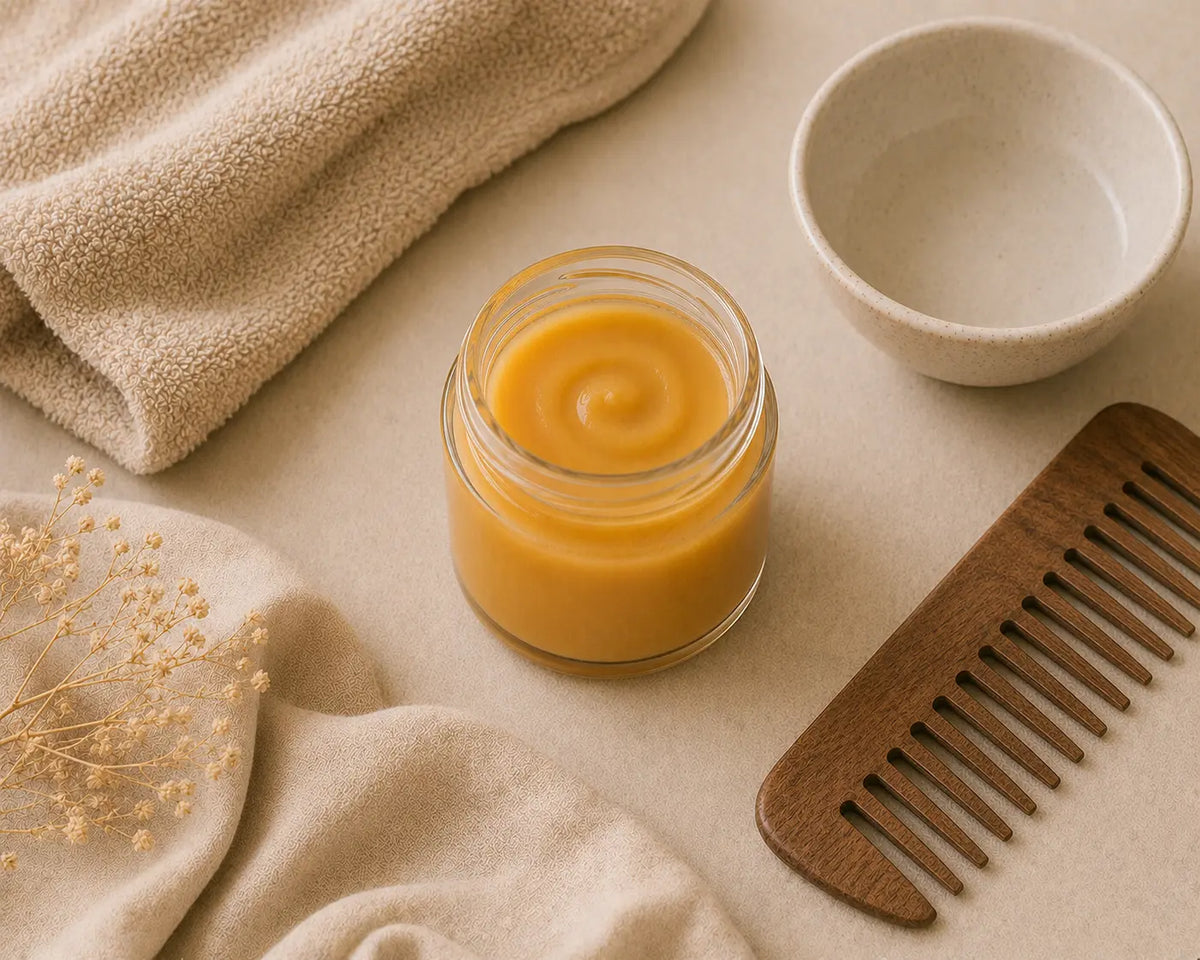
Sea moss for hair sounds straightforward until you start looking into it. Claims pile up quickly — hair growth, thickness, shine, scalp health, dryness, breakage — making it hard to know what to take seriously.
So let's take a step back.
This guide explains how some people use sea moss as part of their hair and scalp routine, what it can realistically offer, what to watch out for, and when it's worth speaking to a professional instead.
Why do people use sea moss on their hair?
The main reasons are its texture and its naturally gel-like consistency.
Plain sea moss gel has a slippery, gel-like feel that some people find smooth and conditioning-feeling when used as a rinse-off hair mask or scalp treatment. Others add sea moss gel to their diet as part of a general wellness routine, with hair among the reasons they're interested.
Either way, it helps to have realistic expectations. Sea moss is one ingredient, not a complete hair care routine.
Sea moss will not make your hair grow faster
Honestly, it shouldn't be treated as a hair growth treatment.
Hair growth is influenced by many factors: genetics, hormones, nutrition, stress, medication, heat damage, chemical treatments, and underlying health conditions. No single ingredient addresses all of that.
If you're dealing with sudden shedding, bald patches, scalp pain, or ongoing hair loss, the right move is to speak to a GP, trichologist, pharmacist, or dermatologist — not reach for a homemade mask.
Sea moss is not a treatment for dry hair
Some people find that plain sea moss gel makes their hair feel softer or more moisturised as a rinse-off mask, thanks to its smooth, gel-like texture.
That is a matter of how it feels, not a treatment. Results vary, and sea moss gel isn't the same as a properly formulated hair treatment. Think of it as a simple, natural addition rather than a replacement for good products or professional advice.
Can you apply sea moss gel directly to your hair?
Yes — some people do apply plain sea moss gel directly to the hair or scalp as a rinse-off treatment.
If you want to try it, keep a few things in mind:
- Use plain sea moss gel only.
- Start with a small amount.
- Rinse thoroughly afterwards.
- Avoid flavoured sea moss gels — anything containing fruit, honey, spices, or other food ingredients has no place in your hair.
Your hair doesn't need a smoothie; it needs clean, appropriate products.
How to patch test sea moss gel
Before applying sea moss gel to your scalp, do a patch test, especially if you have sensitive skin.
- Apply a small amount of plain sea moss gel to a discreet area of skin, such as the inner arm or behind the ear.
- Leave it briefly, then rinse off.
- Wait 24 hours and look for any redness, itching, burning, swelling, or irritation.
- If your skin reacts, don't use it on your scalp or hair.
This step matters if you have eczema, psoriasis, dermatitis, allergies, or any scalp sensitivity.
A simple sea moss hair mask to try
If your skin and scalp tolerate plain sea moss gel, try this simple rinse-off mask:
- Begin with clean or lightly damp hair.
- Apply a small amount of plain sea moss gel to the lengths of your hair.
- Avoid any broken, sore, or irritated areas of the scalp.
- Leave it on briefly.
- Rinse thoroughly with lukewarm water.
- Follow with your usual conditioner or styling routine if needed.
Keep it simple; more ingredients don't automatically mean better results.
Should you put sea moss gel on your scalp?
Proceed with care here.
Your scalp is skin and can react to ingredients like your face or body. If it is itchy, sore, flaky, or inflamed, avoid experimenting with sea moss gel without consulting a professional.
If you do apply it and notice any itching, burning, redness, or bumps, rinse it off straight away and stop using it.
Eating sea moss will not change your hair
Some people include sea moss gel in their diet — stirred into smoothies, porridge, or warm drinks — as part of a broader wellness routine, and hair is often a motivating factor.
Sea moss naturally contains minerals, but eating it doesn't guarantee changes in hair thickness, length, or condition. The condition of your hair is tied to overall well-being, nutrition, hormones, stress levels, hair care habits, and medical factors. Sea moss can play a small part in a wider routine, but it shouldn't carry all the expectation.
What to avoid
If you use sea moss on your hair or scalp, keep these in mind:
- Don't use gel that smells sour, looks off, or may have spoiled.
- Don't use flavoured sea moss gel in your hair.
- Don't apply it to broken, sore, or inflamed skin.
- Don't leave it on for extended periods.
- Don't mix it with harsh ingredients like lemon juice, strong essential oils, or exfoliating acids.
- Stop using it immediately if your scalp becomes irritated.
Sea moss gel vs proper hair products
It's worth understanding the difference.
Formulated hair products are developed with pH balance, preservation, texture, scalp compatibility, and stability in mind. Sea moss gel from your fridge is a fresh, food-style product. It can be used thoughtfully as a rinse-off mask but should be treated differently from a finished cosmetic.
Who should be extra careful?
Take extra care — or speak to a professional before trying — if you:
- Have a sensitive scalp.
- Have eczema, psoriasis, dermatitis, or any active scalp condition.
- Have broken or inflamed skin on the scalp.
- Are prone to allergic reactions.
- Use prescription scalp treatments.
- Are experiencing unexplained hair loss or shedding.
- Are unsure what's in the gel you're using.
What actually supports healthy-looking hair?
Sea moss gets a lot of attention, but fundamentals still make the biggest difference:
- Gentle, regular washing and conditioning.
- A routine suited to your hair type.
- A balanced diet.
- Staying well hydrated.
- Minimising unnecessary heat damage.
- Avoiding styles that put excessive tension on the hair.
- Seeking professional advice for scalp issues or hair loss.
No single ingredient replaces a routine that genuinely works for your hair.
A note on medical advice
This article is for general information only and does not constitute medical advice. Sea moss should not be used to diagnose, treat, cure, or prevent hair loss, scalp conditions, or any medical condition. If you have concerns about hair loss, scalp irritation, or any ongoing hair or scalp issues, please speak to a qualified healthcare professional.
Final thoughts
Sea moss for hair is best approached with a level head.
Plain sea moss gel may feel smooth and moisturising as a rinse-off mask for some people — but it's not a guaranteed treatment for hair growth, and it won't fix underlying issues. Patch test before you start, stick to plain gel, keep well away from irritated skin, and stop straight away if anything doesn't feel right.
Sea moss can be a simple addition to a careful, intentional routine — just one part of taking care of yourself.